iEarth Showcased at COP31, Bridging AI and Physical Models for Real-World Climate Action
16 November 2026
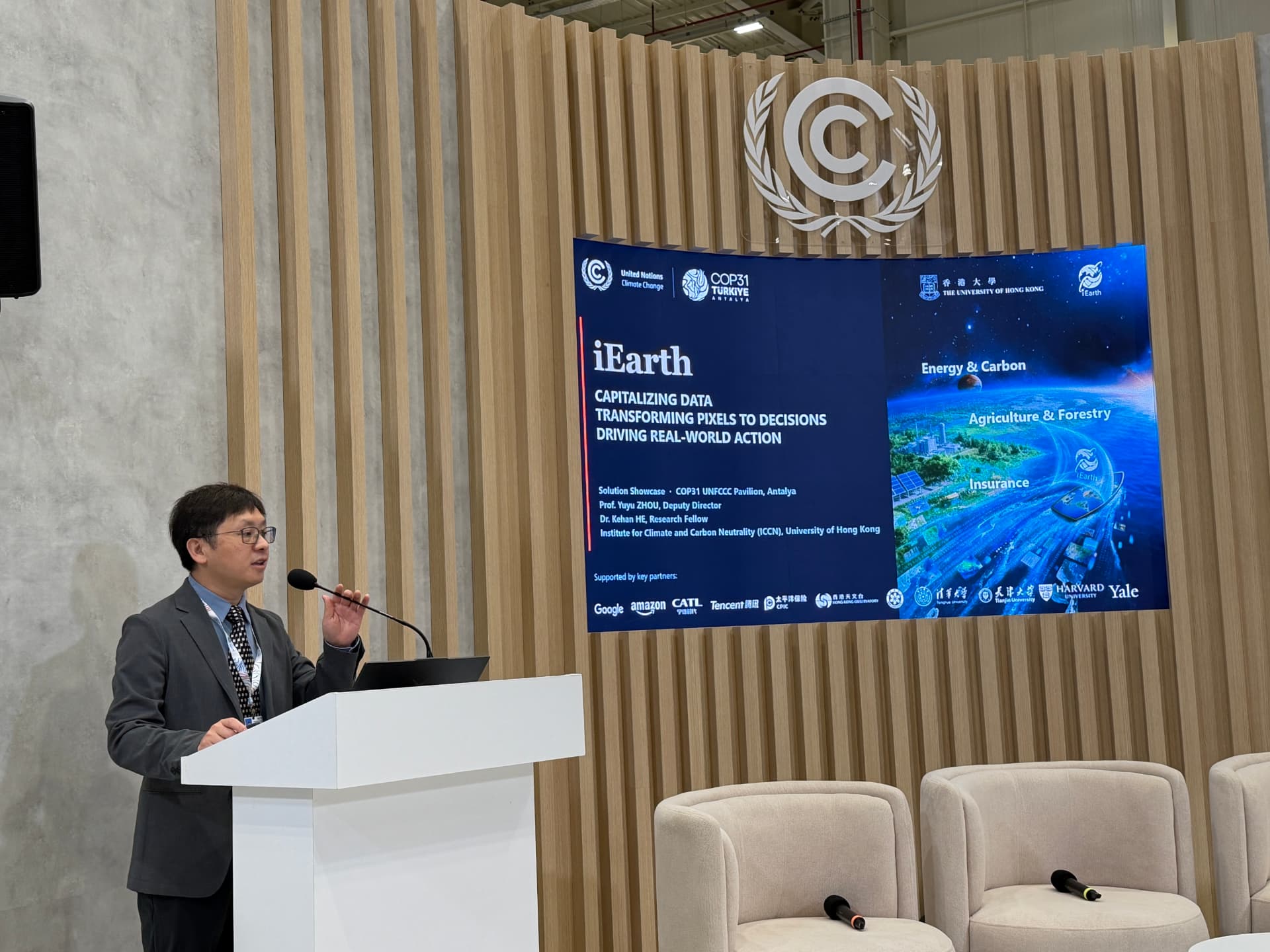
The iEarth artificial intelligence platform was showcased at the 31st Conference of the Parties to the United Nations Framework Convention on Climate Change (COP31) in Antalya, Türkiye, on 16 November 2026, drawing strong recognition from international climate and finance leaders. Presented during Science, Industry and Technology Day at an official side event in the Blue Zone's UNFCCC Pavilion, the platform was spotlighted for its ability to bridge Earth observation data and real-world climate action. The session—titled "From Pixels to Decisions: iEarth Smart Earth Solutions for Energy, Industry, and Paris Agreement Implementation in ASEAN"—was also livestreamed worldwide.
Bridging Science and Decision-Making
Introducing the platform, the iEarth team explained how it integrates artificial intelligence, physical models, and domain expertise to turn raw satellite data into actionable intelligence across energy, carbon sinks, agriculture, forestry, and insurance. The team also demonstrated practical applications—including energy infrastructure mapping, flood risk assessment, post-disaster damage estimation, and landslide early warning—and outlined plans to expand iEarth across Southeast Asia.
The platform's capabilities resonated strongly with opening remarks by Andrea Camponogara, Global Lead of the Regional Collaboration Centres (RCC) at the United Nations Framework Convention on Climate Change (UNFCCC). Mr Camponogara emphasised that measurable, verifiable scientific evidence is indispensable for governments enacting climate policies and investors committing capital.
De-Risking Clean Energy Investment Across the Region
During a panel discussion moderated by Professor Zhou, Dr Heather Lynne Taylor-Strauss, Economic Affairs Officer at the United Nations Economic and Social Commission for Asia and the Pacific (UN ESCAP), emphasised the vital role of investment promotion agencies in attracting corporate capital and securing project financing. Citing typhoon-prone islands—where a severe storm once left an entire island without power for a month—she noted that investors are highly sensitive to climate risks. Tools like iEarth can help local authorities identify viable wind and solar sites through granular risk assessments and feasibility analyses, she said, expressing interest in future collaboration.
Unlocking Grid Financing for National Energy Transitions
Addressing national implementation, Edo Mahendra, Executive Chair of the Indonesia Energy Transition Implementation Joint Office (IET), noted that as an archipelagic nation, Indonesia requires a tailored transition pathway. Because lagging transmission projects often yield negative net present values under current revenue models, the government is exploring five financing mechanisms—including infrastructure investment funds and trusts—to attract private capital. Indonesia is also studying Article 6.2 carbon credit mechanisms under the Paris Agreement to bridge cost gaps for offshore wind and remote diesel-to-solar projects, alongside large-scale grid expansion and smart microgrids toward its 2030 renewable targets.
Building Standardised Carbon Market Infrastructure
From a market perspective, Oi-Yee Choo, of Climate Impact X (CIX), explained that CIX connects Global South carbon supply with Global North demand. As companies integrate carbon procurement into their core strategies, standardised market infrastructure is critical to ensuring trading convenience, supply integrity, and retirement transparency. Backed by financial institution shareholders, CIX has strengthened its portfolio management, settlement, and analytics capabilities, and—under Singapore-led COP31 initiatives—will continue helping small and medium-sized enterprises overcome sourcing, pricing, and contractual hurdles to advance Article 6.2 credit flows.
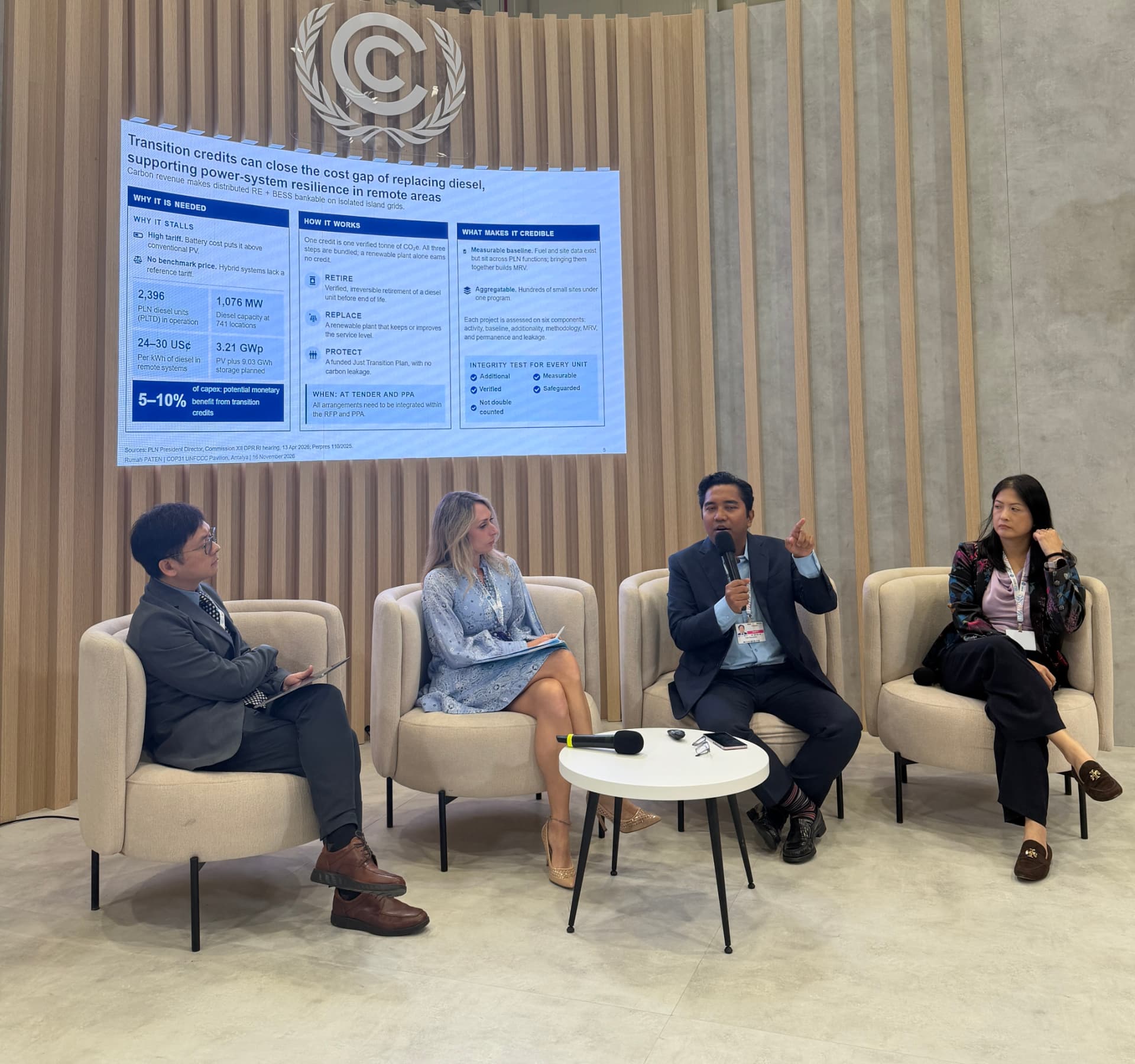
Panellists agreed that pairing AI-enabled intelligence with cross-border collaboration is key to accelerating the energy transition. Building on this momentum, the iEarth team will continue to advance the platform's regional deployment and strengthen ties across climate technology, sustainable finance, and governance in ASEAN and beyond.